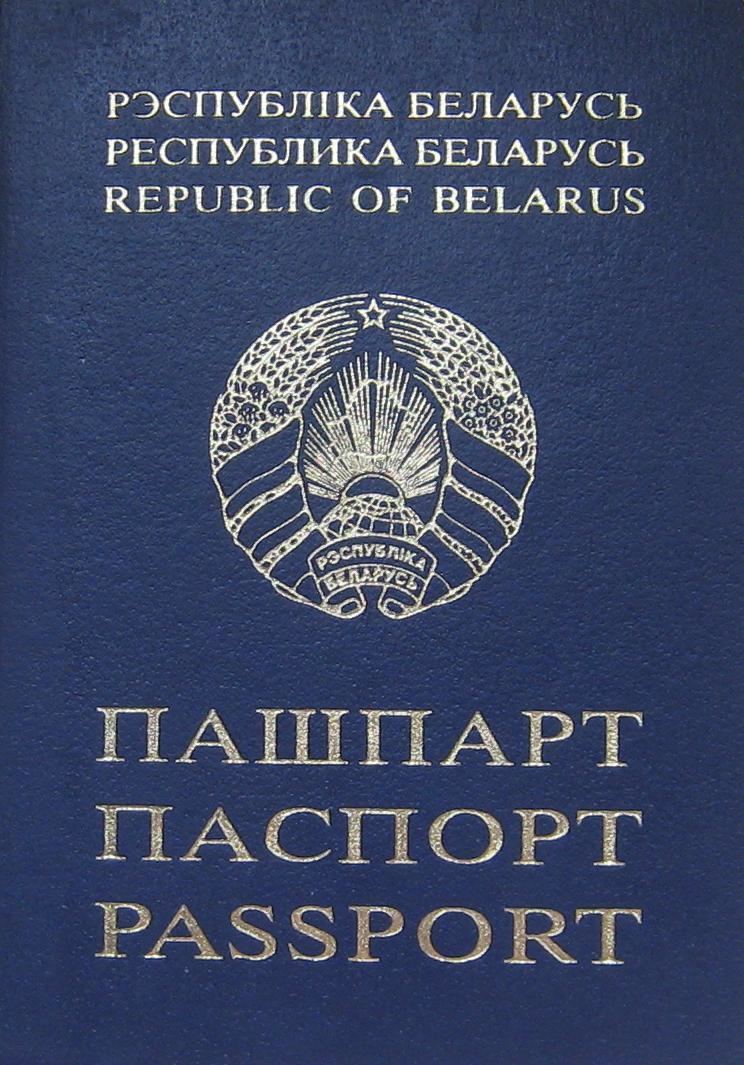
Visa requirements for Belarusian citizens are administrative entry restrictions imposed on citizens of Belarus by the authorities of other states.
Belarusian citizens in other countries also can benefit from the mobility rights arrangements within the Commonwealth of Independent States and the rules of the single market of the Eurasian Economic Union.
As of 2025, Belarusian citizens had visa-free or visa-on-arrival access to 80 countries and territories, ranking the Belarusian passport 60th in the world according to the Henley Passport Index.
History
Visa requirements for Belarusian citizens were lifted (unilaterally or bilaterally, for the first time or repeatedly (in which case, the date of the last cancellation of visas is given) by Cuba 10 March 1999, Turkey (29 April 2013), Serbia 10 August 2013, Brazil (25 November 2016), Argentina (19 May 2017), China (10 August 2018), Saint Kitts and Nevis (23 June 2019), Montenegro (5 August 2019), Albania (15 July 2020), United Arab Emirates (16 January 2021).
Visa requirements map
Visa requirements
Territories and disputed areas
Visa requirements for Belarusian citizens for visits to various territories, disputed areas and restricted zones:
Economic integration and international treaties
Special travel conditions and exceptions to the usual rules, including special migration rules for Belarusian citizens, their family members and conditions for the provision of medical care are provided through international agreements and treaties to Belarusian citizens. The conditions for citizens in a specific country should be clarified in advance because not all countries are parties to all agreements.
- Union State of Russia and Belarus (Russia)
- The rules of the Single Economic Space of the Eurasian Economic Union (Armenia, Russia, Kazakhstan, Kyrgyzstan)
- Mobility rights arrangements of the Commonwealth of Independent States (present and former countries of the Commonwealth of Independent States, including de jure Ukraine and Georgia, but not Turkmenistan)
Permission stamps
Until 1 January 2008, Belarusian citizens had to apply for permission stamps in their passports in order to cross Belarusian borders. Permission stamps were only issued if there were no specific legal restrictions for their travel.
In 2002, the Constitutional Court of Belarus stated in its decision that permission stamps were not constitutional. The Council of Ministers was ordered to propose a different kind of a citizen border control before 1 January 2006.
The decree of the President of the Republic of Belarus dated 17 December 2007 finally abolished permission stamps.
Non-visa restrictions
Many countries have entry restrictions on foreigners that go beyond the common requirement of having either a valid visa or a visa exemption. Such restrictions may be health related or impose additional documentation requirements on certain classes of people for diplomatic or political purposes.
Blank passport pages
Many countries require a minimum number of blank pages to be available in the passport being presented, typically one or two pages. Endorsement pages, which often appear after the visa pages, are not counted as being valid or available.
Vaccination
Many African countries, including Angola, Benin, Burkina Faso, Burundi, Cameroon, Central African Republic, Chad, Democratic Republic of the Congo, Republic of the Congo, Côte d'Ivoire, Equatorial Guinea, Gabon, Gambia, Ghana, Guinea-Bissau, Kenya, Liberia, Mali, Mauritania, Niger, Rwanda, Senegal, Sierra Leone and Togo, South Sudan, Uganda, and Zambia, require all incoming passengers older than nine months to one year to have a current International Certificate of Vaccination or Prophylaxis, as does the South American territory of French Guiana.
Some other countries require vaccination only if the passenger is coming from an infected area or has visited one recently or has transited for 12 hours in those countries: Algeria, Botswana, Cabo Verde, Chad, Djibouti, Egypt, Eswatini, Ethiopia, Gambia, Ghana, Guinea, Lesotho, Libya, Equatorial Guinea, Eritrea, Madagascar, Malawi, Mauritania, Mauritius, Mozambique, Namibia, Nigeria, Papua New Guinea, Seychelles, Somalia, South Africa, Sudan, Tunisia, Uganda, United Republic of Tanzania, Zambia and Zimbabwe.
Passport validity length
Very few countries, such as Paraguay, just require a valid passport on arrival.
However many countries and groupings now require only an identity card – especially from their neighbours. Other countries may have special bilateral arrangements that depart from the generality of their passport validity length policies to shorten the period of passport validity required for each other's citizens or even accept passports that have already expired (but not been cancelled).
Some countries, such as Japan, Ireland and the United Kingdom, require a passport valid throughout the period of the intended stay.
In the absence of specific bilateral agreements, countries requiring passports to be valid for at least 6 more months on arrival include Afghanistan, Algeria, Anguilla, Bahrain, Bhutan, Botswana, British Virgin Islands, Brunei, Cambodia, Cameroon, Cape Verde, Cayman Islands, Central African Republic, Chad, Comoros, Costa Rica, Côte d'Ivoire, Curaçao, Ecuador, Egypt, El Salvador, Equatorial Guinea, Fiji, Gabon, Guinea Bissau, Guyana, Haiti, India, Indonesia, Iran, Iraq, Israel, Jordan, Kenya, Kiribati, Kuwait, Laos, Madagascar, Malaysia, Marshall Islands, Mongolia, Myanmar, Namibia, Nepal, Nicaragua, Nigeria, Oman, Palau, Papua New Guinea, Peru, Philippines, Qatar, Rwanda, Samoa, Saudi Arabia, Singapore, Solomon Islands, Somalia, Sri Lanka, Sudan, Suriname, Tanzania, Thailand, Timor-Leste, Tokelau, Tonga, Turkey, Tuvalu, Uganda, United Arab Emirates, Vanuatu, Venezuela, and Vietnam.
Countries requiring passports valid for at least 4 months on arrival include Micronesia and Zambia.
Countries requiring passports with a validity of at least 3 months beyond the date of intended departure include Azerbaijan, Bosnia and Herzegovina, Honduras, Montenegro, Nauru, Moldova and New Zealand. Similarly, the EEA countries of Iceland, Liechtenstein, Norway, all European Union countries (except Ireland) together with Switzerland also require 3 months validity beyond the date of the bearer's intended departure unless the bearer is an EEA or Swiss national.
Countries requiring passports valid for at least 3 months on arrival include Albania, North Macedonia, Panama, and Senegal.
Bermuda requires passports to be valid for at least 45 days upon entry.
Countries that require a passport validity of at least one month beyond the date of intended departure include Eritrea, Hong Kong, Lebanon, Macau, the Maldives and South Africa.
Maximum passport age
Countries of the Schengen area require non-EU passports to be less than 10 years old upon entry. A number of holders of British passports, which until September 2018 could be issued with a validity period of up to 10 years and nine months if the previous passport was not expired, were unable to travel to the EU subsequent to Brexit due to this restriction.
Criminal record
Some countries, including Australia, Canada, Fiji, New Zealand and the United States, routinely deny entry to non-citizens who have a criminal record, while others impose restrictions depending on the type of conviction and the length of the sentence.
Persona non grata
The government of a country can declare a diplomat persona non grata, banning them from entering the country or expelling them if they have already entered. In non-diplomatic use, the authorities of a country may also declare a foreigner persona non grata permanently or temporarily, usually because of unlawful activity.
Israeli stamps
Kuwait, Lebanon, Libya, and Yemen do not allow entry to people with passport stamps from Israel or whose passports have either a used or an unused Israeli visa, or where there is evidence of previous travel to Israel such as entry or exit stamps from neighbouring border posts in transit countries such as Jordan and Egypt.
To circumvent this Arab League boycott of Israel, the Israeli immigration services have now mostly ceased to stamp foreign nationals' passports on either entry to or exit from Israel (unless the entry is for some work-related purposes). Since 15 January 2013, Israel no longer stamps foreign passports at Ben Gurion Airport. Passports are still (as of 22 June 2017) stamped at Erez when passing into and out of Gaza.
Iran refuses admission to holders of passports containing an Israeli visa or stamp that is less than 12 months old.
Biometrics
Several countries mandate that all travellers, or all foreign travellers, be fingerprinted on arrival and will refuse admission to or even arrest travellers who refuse to comply. In some countries, such as the United States, this may apply even to transit passengers who merely wish to change planes rather than go landside.
Fingerprinting countries/regions include Afghanistan, Argentina, Brunei, Cambodia, China, Ethiopia, Ghana, Guinea, India, Japan, Kenya (both fingerprints and a photo are taken), Malaysia upon entry and departure, Mongolia, Saudi Arabia, Singapore, South Korea, Taiwan, Thailand, Uganda, the United Arab Emirates and the United States.
Many countries also require a photo be taken of people entering the country. The United States, which does not fully implement exit control formalities at its land frontiers (although long mandated by its own legislation), intends to implement facial recognition for passengers departing from international airports to identify people who overstay their visa.
Together with fingerprint and face recognition, iris scanning is one of three biometric identification technologies internationally standardised since 2006 by the International Civil Aviation Organization (ICAO) for use in e-passports and the United Arab Emirates conducts iris scanning on visitors who need to apply for a visa.
See also
- Visa policy of Belarus
- Belarusian passport
References and Notes
- References
- Notes